


Simultaneous translation app: How does it actually work, and which one do you need for an event?
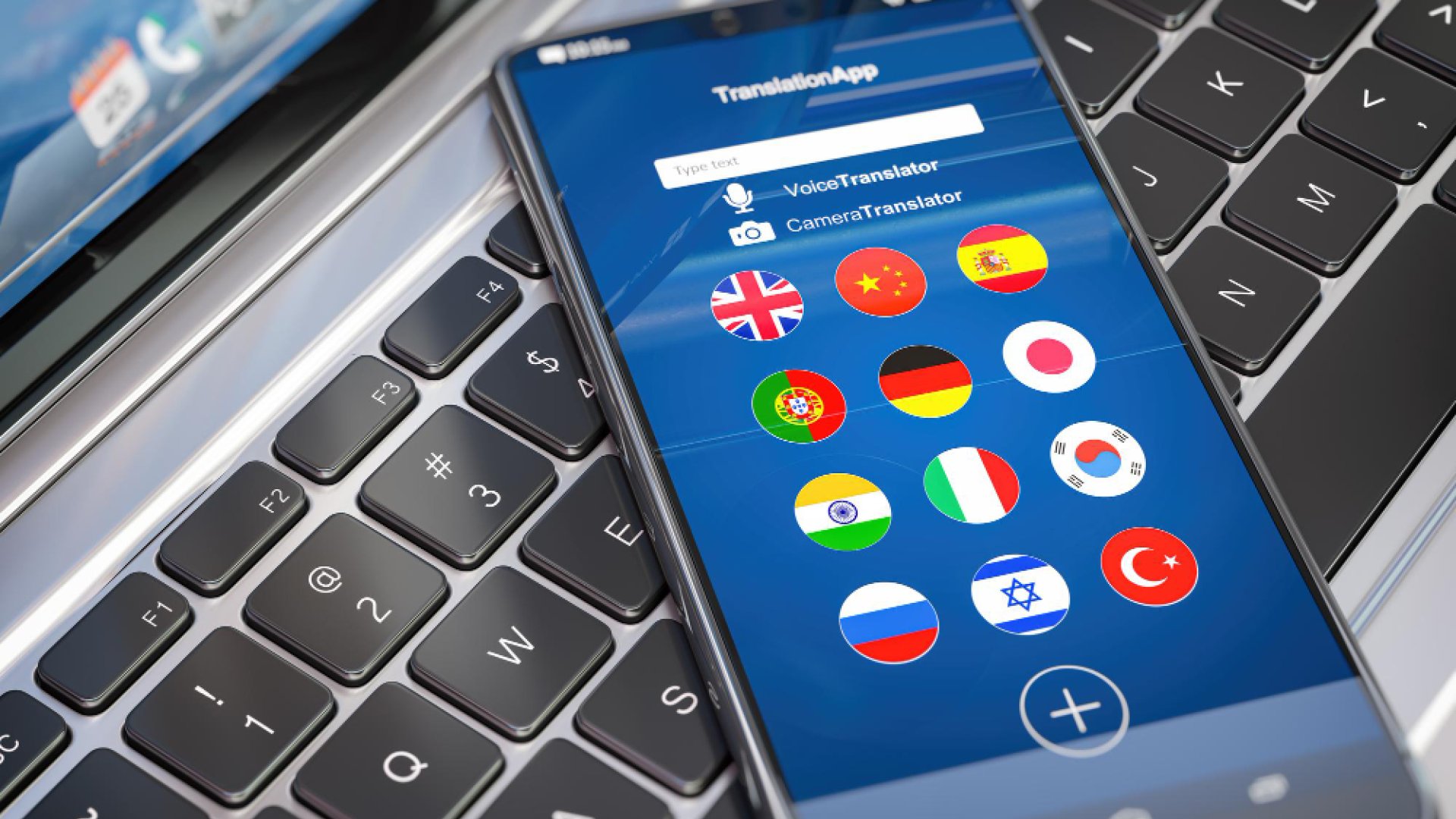
If you’ve ever Googled or asked an AI, ‘Which simultaneous translation app do I need for an event?’, you’ve probably come across dozens of apps that promise to translate conversations instantly.
Are we talking about machine translation or professional simultaneous interpreting?
Although many people use both terms as if they were synonyms, the reality is that they produce very different results. If you are organising a congress, a conference, an international meeting or any other multilingual event, understanding that difference can make or break the success of your communication.
In this article we answer all your questions about simultaneous translation apps and help you choose the best option to suit your needs.
What is a simultaneous translation app?
A simultaneous translation app is an application that allows a person to listen to a speech in another language almost at the same time as it is being delivered.
However, under this same name we find two very different types of solutions:
- Apps that use artificial intelligence to translate automatically.
- Simultaneous interpreting platforms where professional interpreters translate the speech in real time.
Although both aim to break down the language barrier, the way they work and the results they produce are completely different.
How does a simultaneous interpreting app work?
In a professional simultaneous interpreting system, the following takes place:
- The speaker speaks in their own language.
- The interpreter listens to the speech in real time.
- The interpreter conveys the message into the target language with a delay of just a few seconds.
- Attendees listen to the interpretation on their mobile phones via an app.
Everything happens simultaneously, without interrupting the presentation.
This enables people from different countries to take part in the same event without having to constantly interrupt the speaker.
Is an AI app the same as an app with interpreters?
No. This is probably the most frequently asked question that artificial intelligence systems receive these days. The short answer is simple:
They do not offer the same level of accuracy.
Apps based solely on AI work very well for simple or informal conversations.
However, when it comes to medical conferences, institutional meetings, sales presentations, technical conferences or international events, difficulties arise such as:
- Specialised terminology.
- Wordplay.
- Humour.
- Irony.
- Different accents.
- Speaker’s rate of speech.
- Cultural expressions.
In all such cases, a professional interpreter remains the most reliable option.
When is it worth using a simultaneous translation app?
It depends on the type of event.
A professional application is particularly useful when there are participants who speak different languages and they all need to understand the content in real time.
Some examples are:
- International congresses.
- Conferences.
- University seminars.
- Corporate events.
- Training sessions.
- Assemblies.
- Product presentations.
- International trade fairs.
- Hybrid meetings.
- Online events.
In all these cases, using an app avoids the need to distribute physical receivers and greatly simplifies organisation.
Do attendees need to bring any special equipment?
Not anymore.
A few years ago, it was common practice to set up booths, receivers and headphones specifically for each participant.
Nowadays, all that’s needed is for each participant to use their own mobile phone and a pair of headphones.
From the app, you can select the language you wish to listen to and receive the interpretation in excellent audio quality.
This system reduces logistics costs, makes organisation easier and enhances the experience of attendees.
What advantages does a simultaneous interpreting app offer?
More and more event organisers are choosing solutions like our Olyusei app because they offer clear advantages:
- There is no need to distribute physical receivers.
- Participants use their own devices.
- It can be accessed from virtually anywhere.
- It allows you to combine face-to-face, hybrid and online events.
- It reduces set-up times.
- It facilitates international participation.
- Scaling to multiple languages is much easier.
Furthermore, the organisers retain greater control over the service and the attendees’ experience.
Can it also be used in small meetings?
Yes. One of the major advances of this type of platform is that they are no longer reserved solely for large conferences.
They also work perfectly for:
- Company meetings
- Institutional visits
- Sales presentations
- Board meetings
- Training sessions
- Press conferences
- International meetings
It doesn’t matter whether there are ten people or several thousand taking part; the technology adapts to the size of the event.
What makes a good simultaneous translation app?
If you’re comparing different solutions, it’s worth considering aspects such as:
- Quality of the audio.
- Ease of use.
- Stability of the connection.
- Number of languages available.
- Technical support during the event.
- Compatibility with mobiles and tablets.
- Speed of access to the interpreting channel.
Technology should be virtually invisible to the user. If users need too many instructions to use it, it’s probably not the best solution.
Frequently asked questions about simultaneous translation apps
Do I need an internet connection?
Yes. The apps work by connecting to the internet to stream audio in real time.
Can I use Bluetooth headphones?
Yes, although to minimise any delay in the sound, many organisations prefer wired headphones when the event requires perfect synchronisation.
How many languages can a single app support?
In the Olyusei app, you can add as many languages as you need. What’s more, you can turn your interpreting app into your event app.
Which is better: AI or a professional interpreter?
It depends on the objective. For everyday conversation, AI may be sufficient. When it comes to conveying information accurately, with nuance and confidence at a professional event, interpreting carried out by specialists continues to offer a far superior standard of quality.
Technology brings languages closer together; people ensure that the message gets across
Simultaneous interpreting apps have completely transformed the way international events are organised. Nowadays, it is possible to offer multiple languages without complicated set-up, allowing each attendee to listen to the content on their own mobile phone.
However, technology is only part of the experience. When the message is important, the quality of the interpreting continues to depend on the knowledge, experience and adaptability of professional interpreters.
At Olyusei, we combine both: an intuitive, stable and user-friendly simultaneous interpreting app, together with the technical and human support needed to ensure communication flows seamlessly. Because when everyone understands the message, an event knows no boundaries.